

































What supply chain management covers
Supply chain management means coordinating the movement and storage of goods from suppliers through to customers. In practice, many businesses outsource only part of it — for example, inbound deliveries from suppliers, warehousing and dispatch, or transport across several routes — while keeping purchasing and planning in-house.
Signs it may be worth outsourcing
Outsourcing tends to help most when:
- Several hauliers, warehouses or forwarders are managed separately
- Staff spend a lot of time booking, chasing and resolving deliveries
- It is hard to see where goods are or what transport is costing
- Volumes change through the year and fixed resources do not flex
What to share with a potential partner
A useful proposal depends on good information. Be ready to share:
- The routes and flows involved, with typical volumes and how they vary
- Current service levels and the problems you want to fix
- Delivery requirements at your sites and your customers' sites
- How you need information reported, and to whom
How to measure the arrangement
Agree from the start how performance will be measured and reviewed. Common measures include on-time collection and delivery, damage and claims, accuracy of invoices and how quickly issues are resolved. Regular reviews make it easier to adjust the service as your business changes.
Questions to ask first
Before you commit, ask:
- Which parts are carried out directly and which are arranged through partners
- Who is your day-to-day contact, and how problems are escalated
- How tracking, proof of delivery and invoicing are provided
- What happens if volumes rise or fall significantly
- The notice period and how the arrangement can be changed
Start with the Manchester transport problem you want to solve
A business based in Manchester may receive goods from several suppliers, store them elsewhere in the North West and dispatch to customers across different regions. Write down those movements before deciding to outsource 'the supply chain'. The useful question is which activities need better coordination: booking vehicles, balancing stock movements, handling delivery appointments or bringing shipment information together.
Separate a transport requirement from purchasing, production planning and inventory ownership. A logistics partner may coordinate movements without deciding what you buy or how much stock you hold. Agree those boundaries explicitly so a proposal does not promise a wider service than your business needs or the provider has offered.
Map the flows and the exceptions, not just average volumes
Prepare a representative picture of routes, collection and delivery postcodes, shipment sizes and frequency. Include peak periods, urgent orders and sites requiring appointments. Identify access restrictions, loading equipment and customer-specific delivery instructions. These details help distinguish work that can be planned together from movements needing dedicated attention.
Use your own records to describe recurring problems. For example, separate a late goods-ready time from a late collection, or a missed delivery appointment from a customer refusing an incomplete order. This prevents every problem being labelled 'transport delay' and makes it easier to identify which party can actually improve it.
- Record ordinary and peak shipment volumes separately, with any uncertainty in the forecast.
- List inbound suppliers, storage sites and outbound destinations with full addresses.
- Identify fragile, high-value or restricted goods and their handling needs.
- Describe how orders are released and who can approve a change to a booking.
Compare total cost without assuming outsourcing saves money
Compare the proposed service with what your existing arrangement actually costs and covers. Alongside transport and storage, consider relevant internal administration, repeated handling, waiting time and the cost of resolving exceptions. Avoid counting the same cost twice or presenting staff time as an immediate cash saving when those staff will remain in the business.
Ask how coordination is charged, which carrier or warehouse costs are included and how additional work is approved. Use the same representative shipment profile for each proposal and check what happens when volumes fall or increase. A different price may reflect a different service scope rather than greater efficiency.
Balance price against control and operational risk. Concentrating work with one coordinator can simplify communication but also makes escalation, continuity and exit arrangements more important. Ask how alternative capacity would be sourced and how you would obtain your shipment records if the relationship ended; do not assume any contingency is guaranteed.
Agree responsibilities, information and useful measures
Define who books collections, checks readiness, supplies paperwork, arranges delivery appointments and communicates changes to customers. For each task, identify who performs it and who approves exceptions. Set out the day-to-day contact and escalation route, including the support agreed for active consignments outside normal office hours.
A performance measure needs a shared definition. For on-time delivery, specify the agreed window, the evidence used and how rescheduled orders are recorded. For damage, distinguish reported incidents from confirmed claims. Review invoice discrepancies and unresolved exceptions alongside collection and delivery performance, rather than relying on one headline percentage.
Ask what tracking, proof of delivery and reporting are available for the proposed service. Agree required references, who can access information and how records are shared. Treat any system connection as a separate requirement to confirm, not a feature automatically included in an outsourcing arrangement. Share only the information necessary for quoting and delivery coordination.
Introduce a new arrangement in controlled stages
Consider starting with a clearly defined route, site or shipment type before moving a wider programme. Agree the handover date, outstanding bookings, contact details and responsibilities while old and new arrangements overlap. Make sure suppliers and receiving sites know whose instructions to follow so collections are neither missed nor booked twice.
Review the initial movements against the agreed scope and measures. Check whether goods-ready times, access instructions and reporting references are accurate before adding more work. Keep a route for correcting errors and decide who can approve expansion. A staged change provides evidence from your own operation without relying on promised savings or an invented success story.
Document how you can change or end the service: notice periods, open jobs, records, stored stock and final charges. Retaining oversight is compatible with outsourcing coordination. Your business should still understand which work is arranged, what it costs and who is accountable when an exception needs a decision.
Talk to us about your supply chain
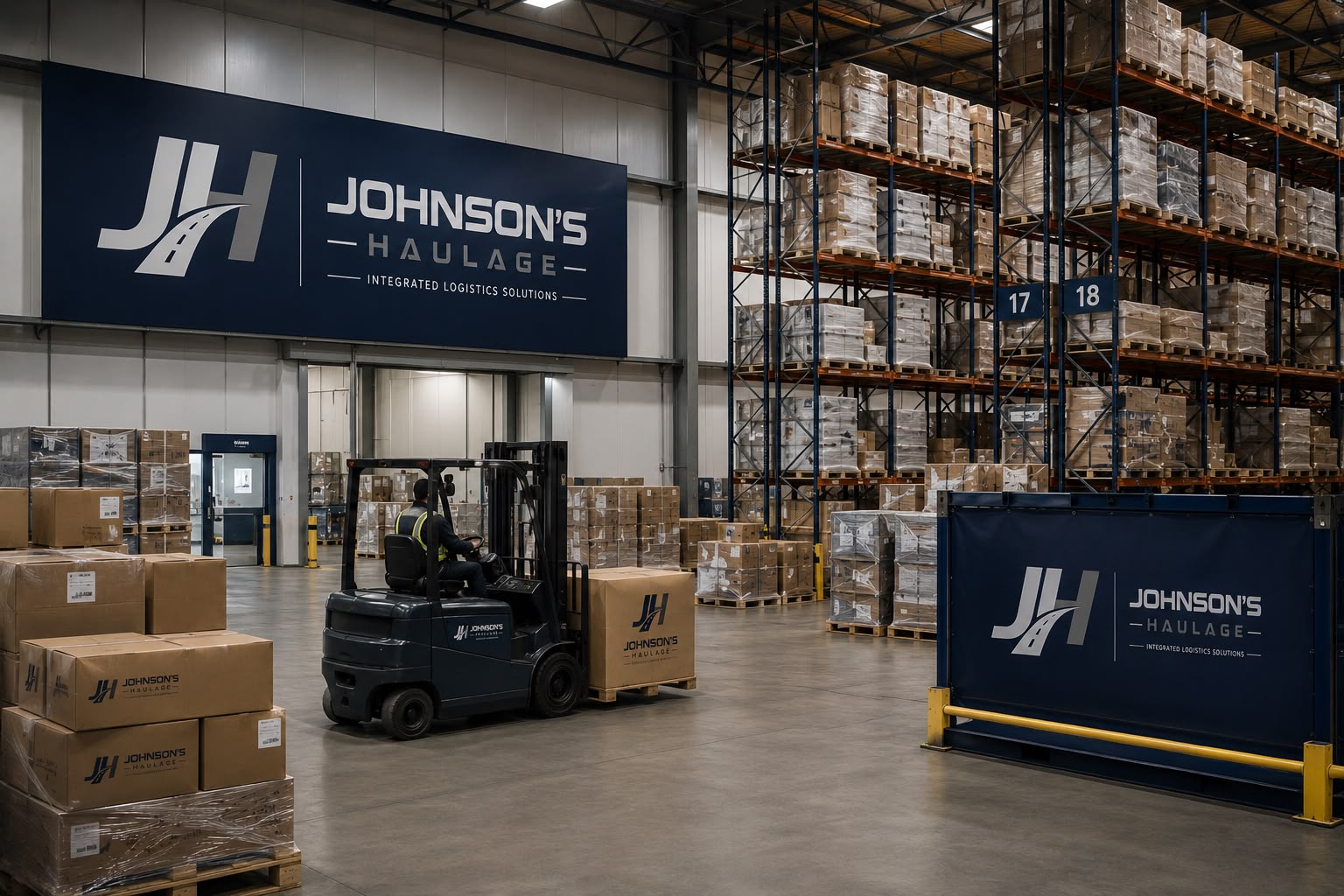
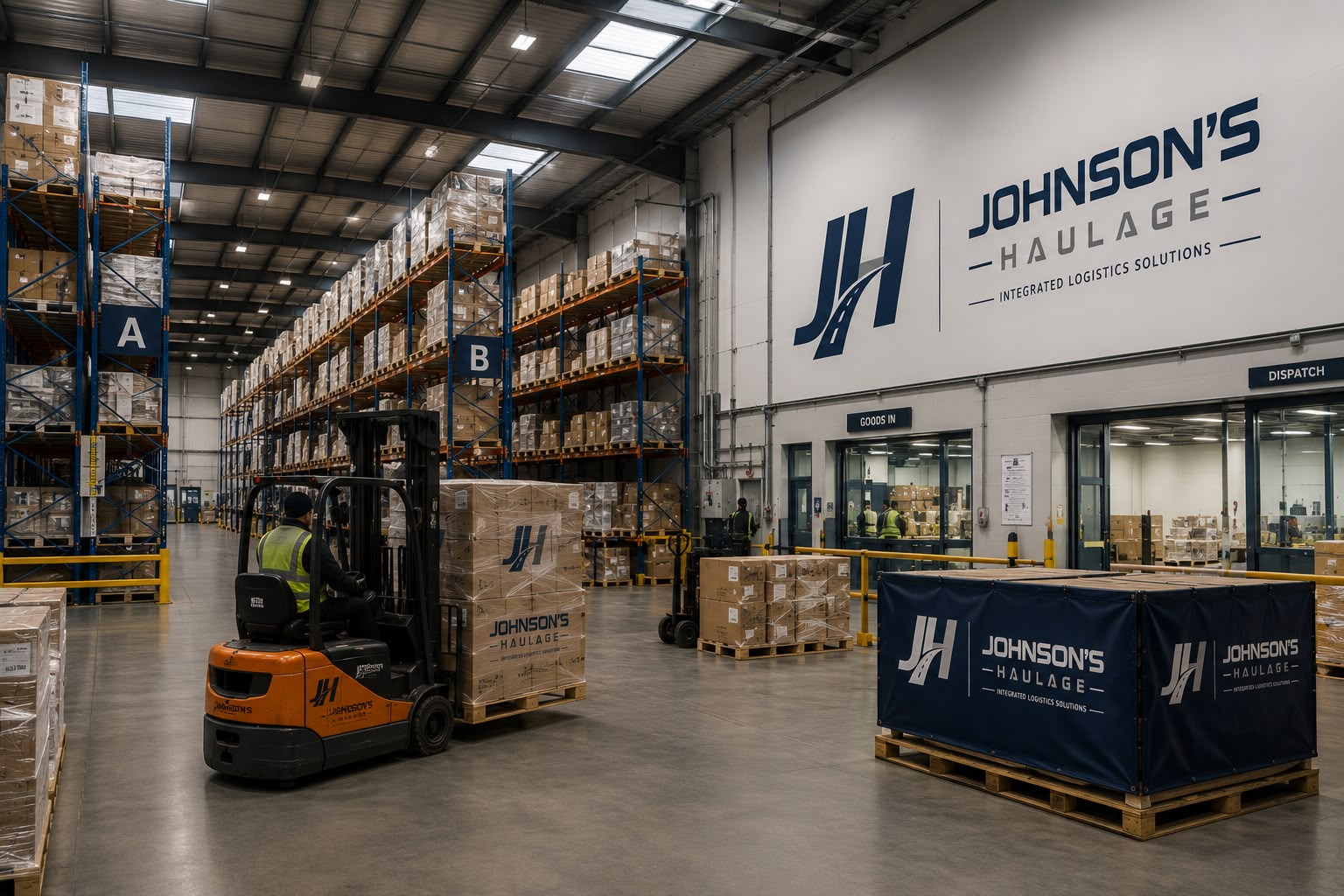
Johnson's Haulage is a transport and logistics management company coordinating road freight, warehousing and international movements through our approved carrier network. Read about our supply chain and warehousing services, see logistics company Manchester, or request a quote to discuss your requirements.
Frequently asked questions
Talk to our team.
Get a tailored quote or speak to our operations team about your transport requirements.