















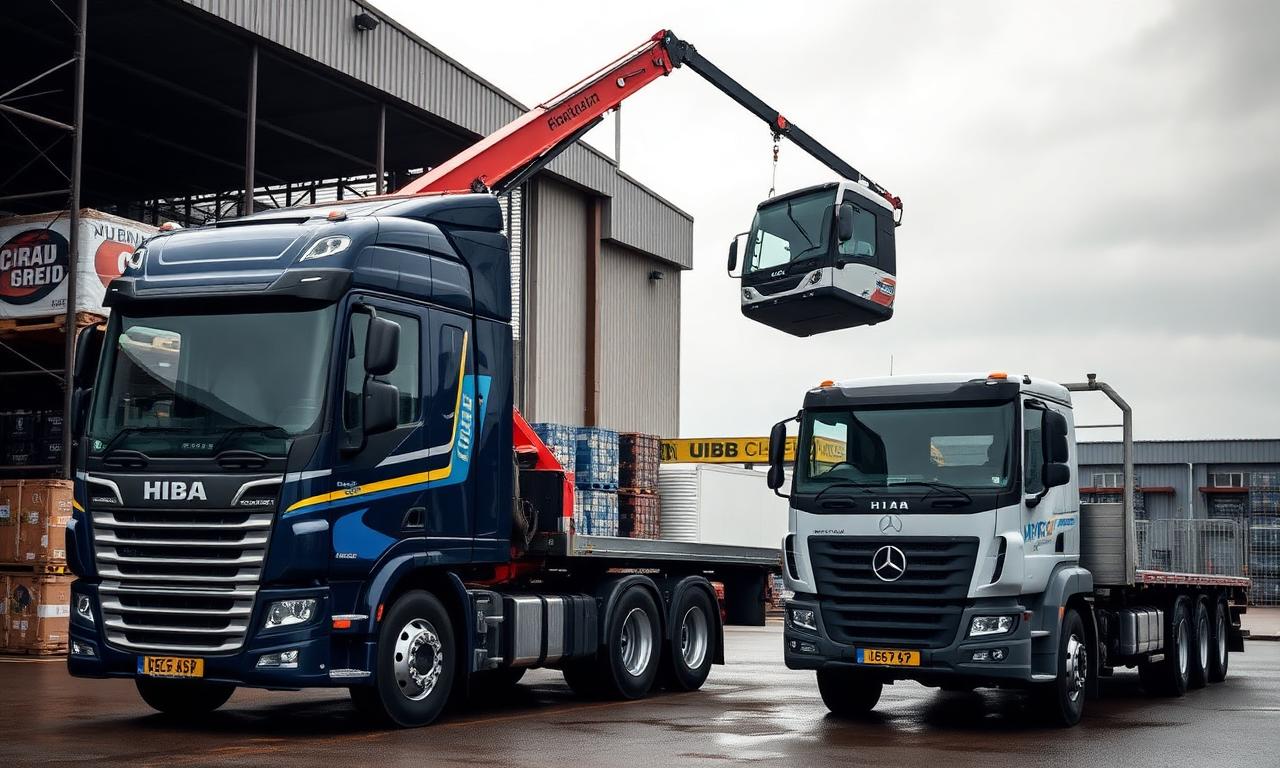
The deciding question: how does the load come off?
When businesses book a rigid or articulated vehicle for building materials, plant or machinery, the choice between a flatbed and a hiab (crane-mounted) vehicle looks like a vehicle question. It is actually an unloading question. A flatbed is the cheaper option — but only if something at the delivery site can take the load off. If the site has no forklift, telehandler or crane, the saving disappears the moment you have to hire lifting equipment separately.
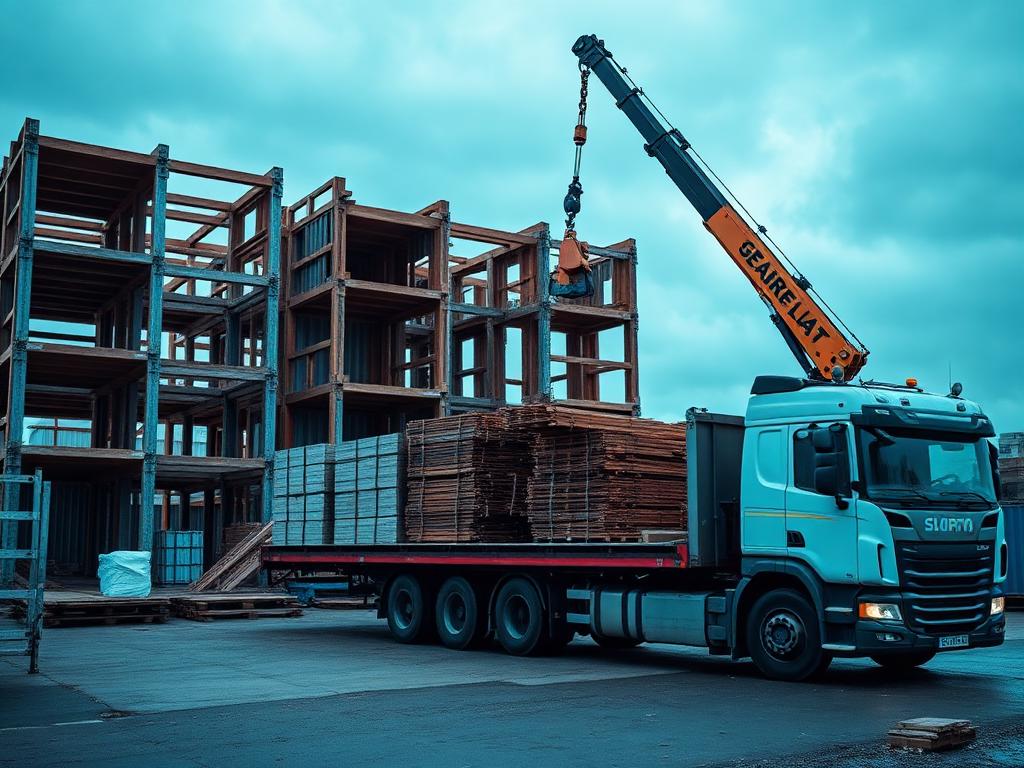
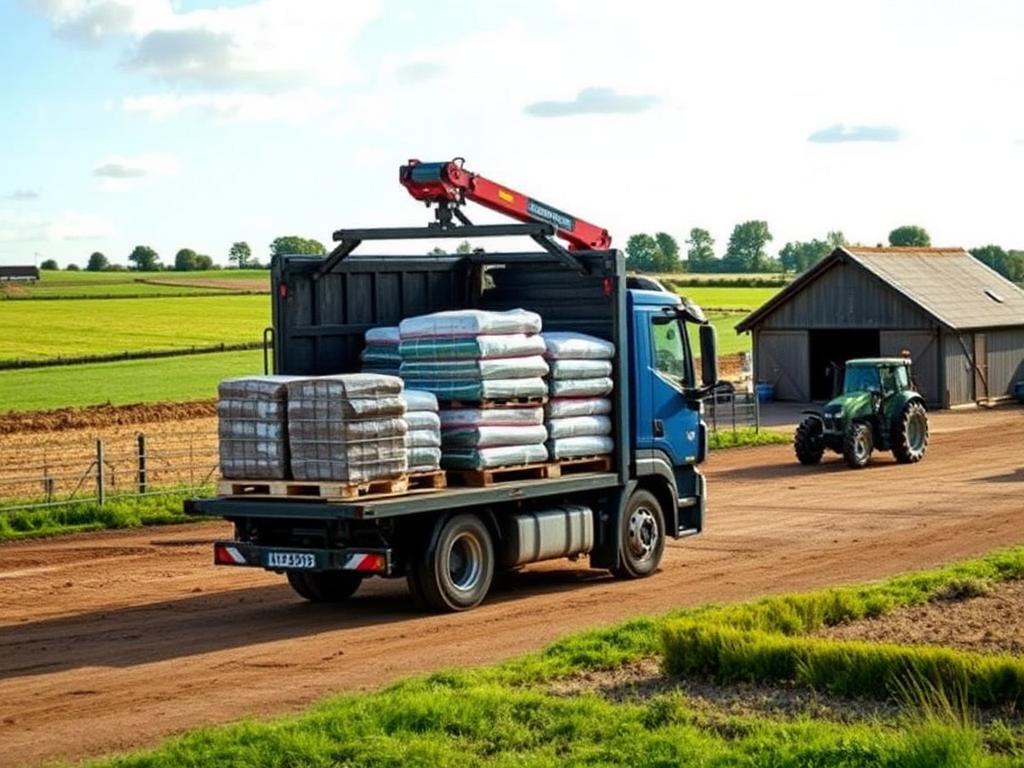
A hiab vehicle carries its own hydraulic loader crane, so the driver can lift the load off the bed and place it where it is needed. That self-sufficiency is why hiabs dominate deliveries to construction sites, farms, events and residential addresses where no mechanical handling exists.
What a flatbed does well
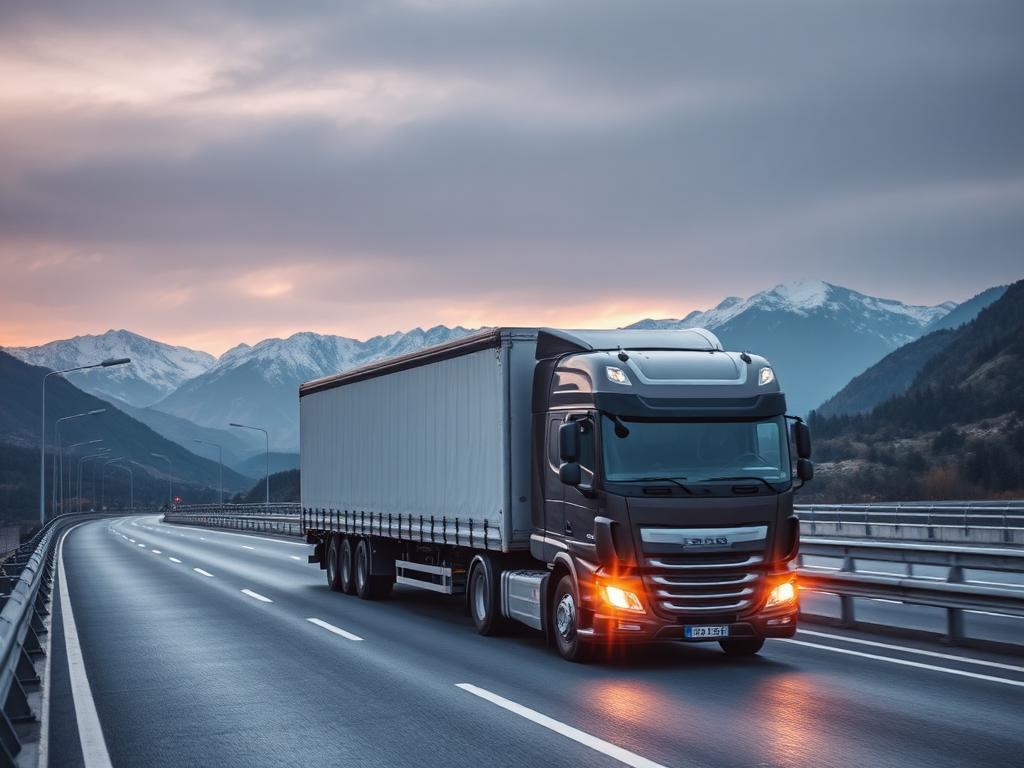
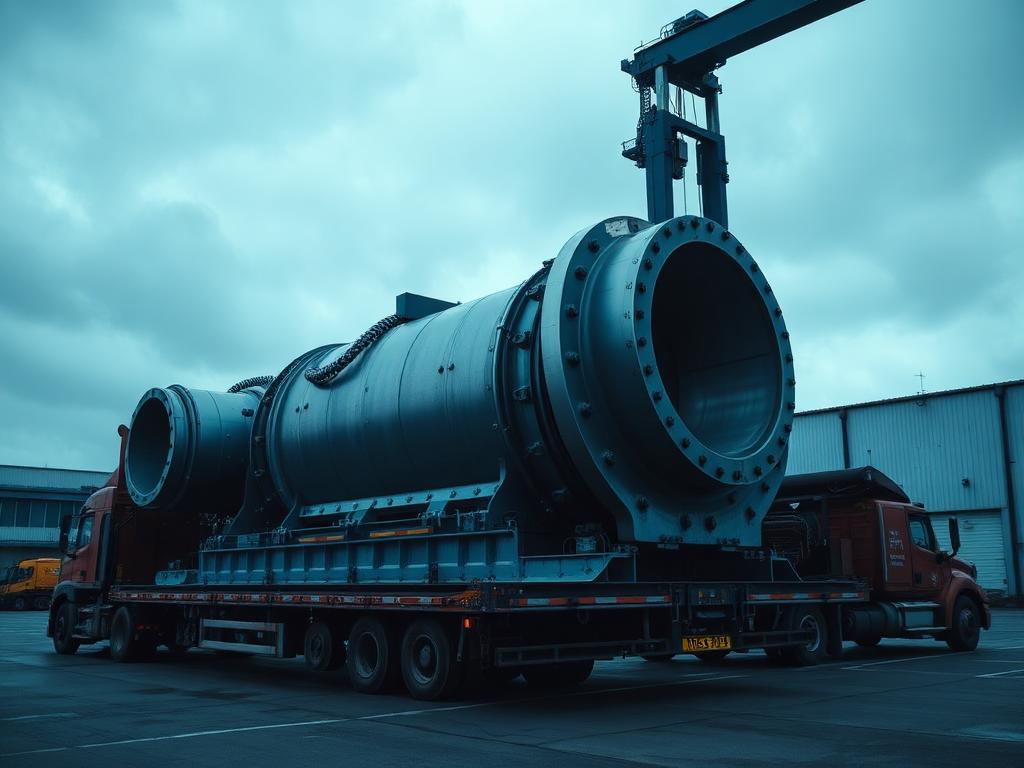
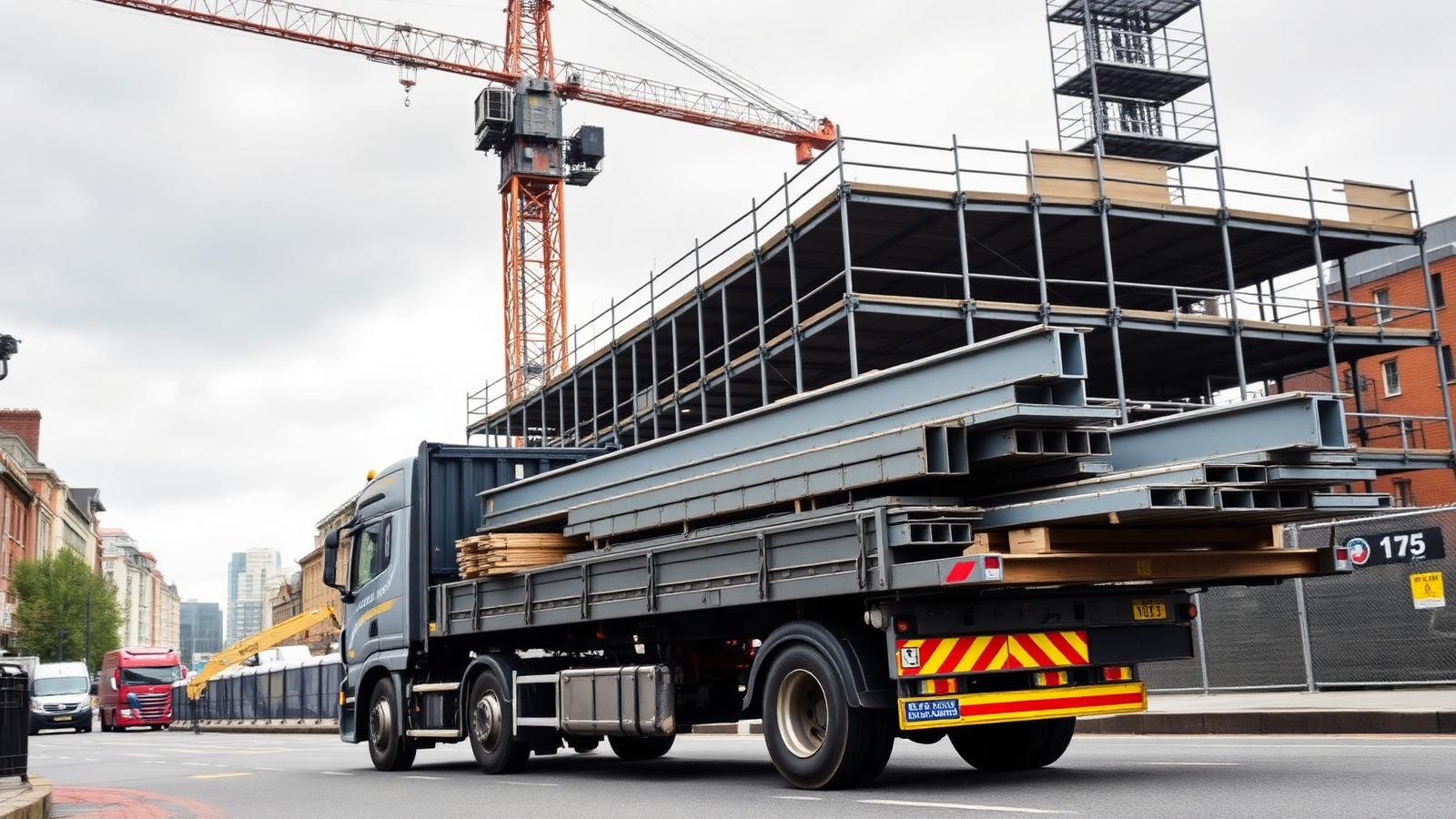
A flatbed is a simple open platform with no sides and no crane. Because the vehicle carries no crane weight, more of its gross weight allowance is available for payload, and the open bed makes loading fast where the site has a forklift or loading dock. For regular site-to-site movements where both ends can unload mechanically — steelwork between fabricators, machinery between depots — a flatbed is usually the most economical choice.
- Lower hire cost than an equivalent hiab vehicle
- Higher payload, as no crane weight is carried
- Fast loading and unloading where both sites have a forklift or dock
- Simple securing: chains or straps direct to the open bed
Where a hiab earns its premium
The hiab's crane turns the delivery vehicle into the lifting solution. Cabins and site offices can be set directly onto prepared bases, containers lifted over fences into compounds, and palletised building materials placed exactly where the groundworks team needs them rather than dropped at the kerb. Across Lancashire and Greater Manchester, the most common hiab bookings we arrange are portable cabins, shipping containers, small plant, generators and precast concrete — loads where placement matters as much as transport.
The trade-off is capacity planning. A crane lifts less at full extension than it does close to the vehicle, so weight and lift radius must be confirmed at booking. A 65 tonne-metre crane handles the majority of commercial lifts, but the details decide whether the job completes on the first visit.
Cost, payload and paperwork compared
Hiab hire typically costs more per job than flatbed hire because the vehicle is more specialised and the operator holds a crane qualification. Offsetting that, you avoid hiring a separate forklift or crane at the destination — which often makes the hiab the cheaper total option for one-off deliveries to unequipped sites.
Crane work also brings documentation. Where a site requires it, the appointed carrier provides a lift plan or RAMS before arrival, and operators carry the relevant certification. If your delivery is to a principal contractor's site, expect this to be mandatory rather than optional.
| Factor | Flatbed | Hiab (crane-mounted) |
|---|---|---|
| Unloading | Site must provide forklift or crane | Vehicle unloads itself |
| Payload | Higher — no crane weight carried | Slightly lower due to crane |
| Placement | Dropped at unloading point | Placed precisely, over obstacles if needed |
| Typical hire cost | Lower | Higher, but can replace separate lifting hire |
| Best for | Site-to-site with handling at both ends | Sites with no lifting equipment |
Flatbed vs hiab: a practical comparison
A quick decision checklist
If you are still unsure which vehicle to book, answer these three questions before requesting a quote: Does the delivery site have a forklift, telehandler or crane available at the delivery time? Does the load need to be placed in a specific position rather than simply unloaded? And is there clear, hard-standing access for the vehicle to operate its crane safely?
If the answer to the first question is no — or the second is yes — book a hiab. If both sites can unload mechanically and the load simply needs to arrive, a flatbed will do the job for less. When in doubt, describe the load and both sites to the planner: a good transport provider will specify the right vehicle rather than let you book the wrong one.
Booking either vehicle through Johnson's Haulage
Johnson's Haulage arranges both flatbed and hiab vehicles through its approved carrier network, planned from our Stockport office. We cover Lancashire, Greater Manchester and the wider UK, and we confirm crane ratings, lift plans and site documentation at booking stage. Call 0161 669 1949 or email info@johnsonshaulage.com (Mon–Fri 08:00–17:30) with the load details and both postcodes, and we will quote the right vehicle for the job.
Frequently asked questions
Talk to our team.
Get a tailored quote or speak to our operations team about your transport requirements.