
























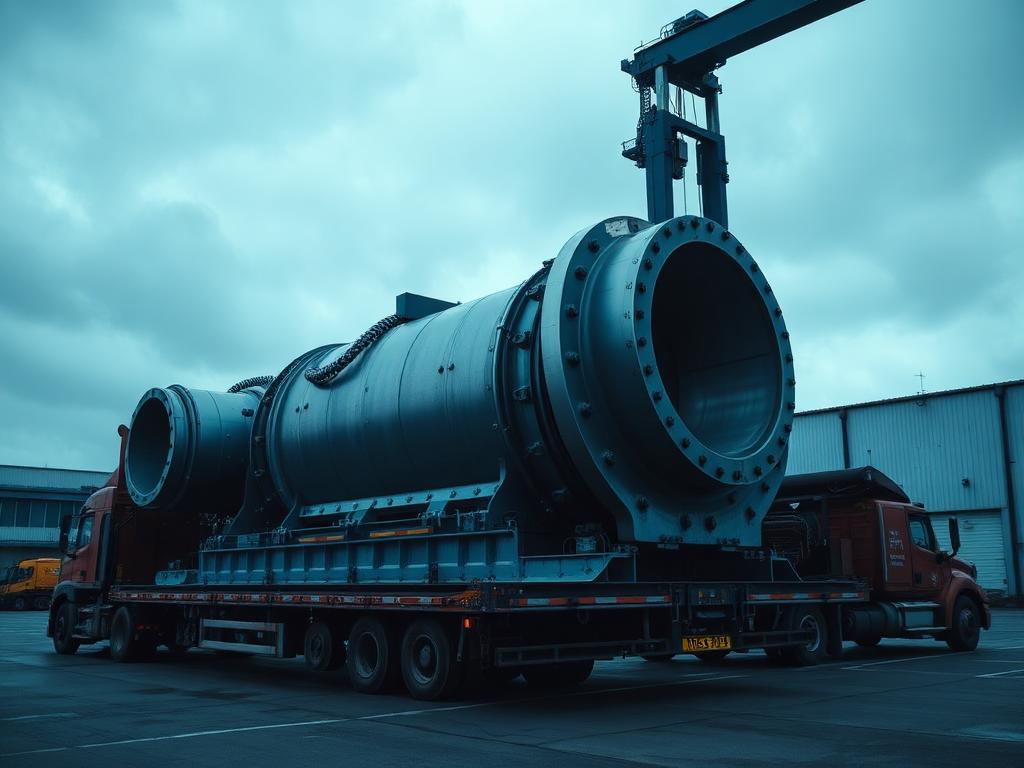
















Why drivers' hours decide your delivery slot
When a transport provider tells you a delivery can be made "before noon" or "any time on the day", the answer is rarely about willingness. It is about how many hours the driver is legally permitted to drive, when they must stop, and how long they must rest before the vehicle can move again. Drivers' hours rules are enforced by the DVSA through digital tachograph records, and breaching them puts the operator's O-licence at risk — so no reputable carrier will bend them to hit a delivery window.
Understanding the basic framework makes planning far easier. It tells you which requests are realistic, why timed deliveries carry a premium, and why a long trunk followed by a tight morning slot sometimes needs two drivers or an overnight tramp rather than one long shift.
The core EU/UK rules at a glance
Most goods vehicles over 3.5 tonnes operating in the UK and to Europe fall under the assimilated EU drivers' hours rules. These are the limits that shape almost every schedule.
| Limit | Standard | Permitted flexibility |
|---|---|---|
| Daily driving | 9 hours | Up to 10 hours, twice in a fixed week |
| Break | 45 minutes after 4.5 hours driving | Can be split into 15 minutes then 30 minutes, in that order |
| Daily rest | 11 hours | Reduced to 9 hours, up to three times between weekly rests |
| Weekly driving | 56 hours | No extension |
| Fortnightly driving | 90 hours across any two weeks | No extension |
| Weekly rest | 45 hours | Reduced to 24 hours, with compensating rest taken later |
Assimilated EU drivers' hours limits for HGV operation
GB domestic rules and the Working Time Directive
Some journeys — typically smaller vehicles and certain exempt operations — run under GB domestic rules instead, which cap driving at 10 hours and total duty at 11 hours in a day, with no tachograph requirement in every case.
Separately, the Road Transport (Working Time) Regulations limit average working time to 48 hours a week over the reference period, cap night work, and require a break after six hours of work. Working time includes loading, unloading, waiting where the duration is unknown, and vehicle checks — not just driving. This is the rule most often overlooked by shippers, because long waits at a delivery point consume a driver's available working time even though the wheels are not turning.
What this means in practice for your bookings
Translating the rules into scheduling terms produces a few practical realities worth building into your own planning.
- A single driver can realistically cover around 400–450 miles in a day once breaks, loading and traffic are accounted for — not the theoretical motorway figure.
- An early-morning delivery several hundred miles away usually requires the vehicle to trunk the night before, which is why timed AM slots cost more than a flexible day.
- Long turnaround times at your site are not free: two hours in a queue may be the difference between a driver reaching the next drop and having to stop for a daily rest.
- Multi-drop routes are constrained by the 4.5-hour break rule, so drop sequencing is planned around where a legal break can actually be taken.
- Double-manning or a driver changeover can compress a long lane into one day, but the cost reflects two drivers, not one.
How Johnson's Haulage plans around the rules
As a transport and logistics management company, we coordinate movements across an approved carrier network rather than operating our own fleet. Before we confirm a collection or delivery window, we check that the lane, the loading time and the requested slot are achievable within a legal shift for the vehicle we are booking — and if they are not, we say so and offer the alternative rather than accepting the job and failing it on the day.
That usually means one of a handful of options: moving the collection earlier, trunking overnight into a local delivery, splitting the load across two vehicles, or using a dedicated double-manned unit where the deadline genuinely justifies it. Each is quoted transparently so you can weigh the cost against the deadline.
Reducing delays at your own site
Shippers have more influence over drivers' hours outcomes than they often realise. Consistent, realistic loading times, accurate booking-in references, forklift availability at the stated hour and clear site access instructions all protect the driver's remaining shift — and therefore protect your delivery reliability further down the route.
If your consignments regularly miss windows or attract waiting-time charges, it is worth reviewing where the hours are actually being consumed. Our coordination team is happy to look at a recent lane with you and set out what a compliant, dependable schedule looks like.
Frequently asked questions
Talk to our team.
Get a tailored quote or speak to our operations team about your transport requirements.